Web Scraping and Sentiment Analysis of Customer Reviews
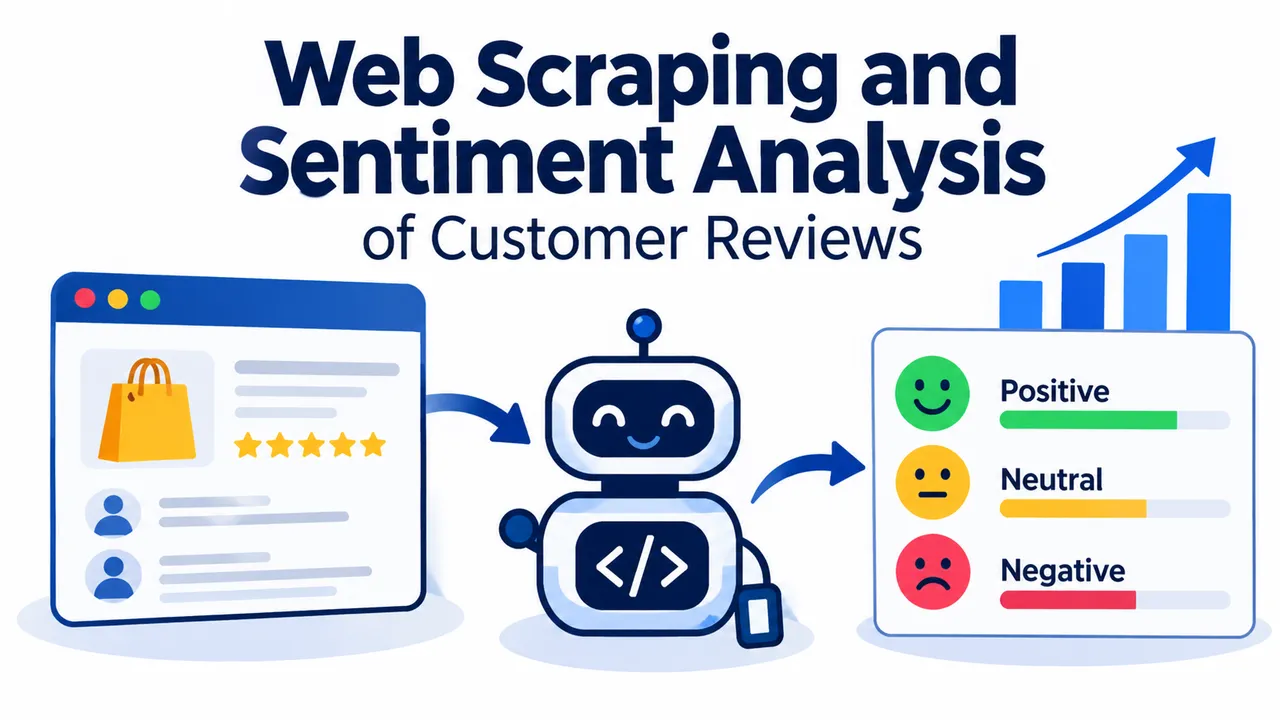
Web Scraping and Sentiment Analysis of Customer Reviews
In today's digital world, customer reviews play an important role in shaping purchasing decisions. Before buying a product or choosing a service, people often visit websites to read reviews and understand other customers' experiences. For businesses, these reviews provide valuable information about customer satisfaction, product quality, and market trends.
However, manually collecting and analyzing thousands of customer reviews can be time-consuming. This is where web scraping and sentiment analysis become useful. Together, these technologies help businesses collect large amounts of customer feedback and understand whether customers have positive, negative, or neutral opinions about their products and services.
What Is Web Scraping?
Web scraping is the process of automatically collecting information from websites using specialized software or scripts. Instead of copying information manually, web scraping tools extract relevant data from web pages and organize it into structured formats.
For customer review analysis, web scraping can collect information such as:
-
Product names and descriptions
-
Customer ratings and reviews
-
Review dates
-
Product prices
-
Customer feedback and comments
This information can then be stored in spreadsheets, databases, or other data-processing systems for further analysis.
What Is Sentiment Analysis?
Sentiment analysis is a Natural Language Processing (NLP) technique used to identify emotions and opinions expressed in written text. It helps determine whether a customer review communicates a positive, negative, or neutral opinion.
For example:
-
Positive: "The product quality is excellent, and I am completely satisfied."
-
Negative: "The delivery was late, and the product was damaged."
-
Neutral: "The product arrived yesterday."
By analyzing these comments, businesses can understand how customers feel about their products and services without reading every review individually.
How Web Scraping and Sentiment Analysis Work Together
Web scraping and sentiment analysis complement each other by combining data collection with intelligent data processing.
The process generally involves the following steps:
1. Identify Relevant Websites
The first step is identifying websites that contain useful customer reviews. These may include e-commerce platforms, product review websites, business directories, and other publicly accessible sources.
2. Collect Customer Reviews
Web scraping tools extract customer comments, ratings, product information, and review dates from selected web pages. The collected information is organized into a structured dataset.
3. Clean and Prepare the Data
Raw data may contain duplicate reviews, unnecessary characters, spelling errors, or incomplete information. Data cleaning helps remove unwanted content and prepare the dataset for analysis.
4. Apply Sentiment Analysis
After preparing the dataset, NLP techniques and machine learning models analyze the collected reviews. Each review is classified into sentiment categories such as positive, negative, or neutral.
5. Analyze the Results
The final step involves examining the results to identify customer satisfaction levels, common complaints, product strengths, and areas that need improvement.
Benefits of Web Scraping for Customer Review Analysis
Combining web scraping with sentiment analysis provides several benefits for businesses.
1. Saves Time and Effort
Automated data collection reduces the need to manually copy and organize customer reviews from multiple websites.
2. Understands Customer Satisfaction
Sentiment analysis helps businesses identify whether customers are happy or dissatisfied with their products and services.
3. Identifies Product Issues
Negative reviews can reveal recurring problems related to product quality, delivery, pricing, and customer support.
4. Supports Better Business Decisions
Customer feedback provides useful insights that help companies improve their products, services, and marketing strategies.
5. Tracks Market Trends
Analyzing reviews over time helps businesses understand changing customer expectations and preferences.
Popular Tools for Web Scraping and Sentiment Analysis
Several tools and technologies can help developers build an effective customer review analysis system.
-
Python: A popular programming language for data extraction and analysis.
-
BeautifulSoup: A Python library used to extract information from HTML pages.
-
Scrapy: A framework designed for large-scale web scraping projects.
-
Selenium: A browser automation tool useful for websites that load content dynamically.
-
Pandas: A Python library used for organizing and processing collected datasets.
-
NLTK: A natural language processing library used for text analysis.
-
TextBlob: A beginner-friendly library for basic sentiment analysis.
The selection of tools depends on project requirements, website structure, data volume, and technical expertise.
Real-World Applications
Web scraping and sentiment analysis are useful across different industries.
E-commerce: Online retailers can analyze product reviews to understand customer satisfaction and improve product listings.
Hospitality: Hotels and restaurants can examine customer feedback to improve service quality and guest experiences.
Healthcare: Organizations can study publicly available feedback about healthcare services to identify common concerns.
Marketing: Marketing teams can understand customer opinions about brands, campaigns, and products.
Market Research: Businesses can monitor customer preferences and compare feedback about competing products.
Challenges and Best Practices
Although web scraping and sentiment analysis offer valuable opportunities, implementing them requires careful planning.
Websites may use different page structures, dynamic content, and anti-bot protections. Similarly, sentiment analysis can sometimes struggle with sarcasm, slang, spelling mistakes, and context-dependent language.
To achieve reliable results, businesses should:
-
Respect website terms of service and robots.txt policies.
-
Follow applicable privacy and data protection laws.
-
Avoid collecting unnecessary personal information.
-
Use proper data cleaning techniques.
-
Regularly validate sentiment classification results.
-
Select scraping methods that match the website's structure.
These practices help maintain data quality and support responsible data collection.
Conclusion
Web scraping and sentiment analysis provide a powerful way to transform customer reviews into meaningful business insights. Web scraping automates the collection of customer feedback, while sentiment analysis identifies the opinions and emotions expressed in that feedback.
By combining these technologies, businesses can understand customer expectations, identify product weaknesses, monitor market trends, and make informed decisions. As data-driven strategies continue to grow, automated customer review analysis can become an important part of modern business intelligence.